In this powerful blog post, Fahmida Begum explores the colonial resonances of adverts for 'skin lightening' products, and questions when we will move past the 'white as right' standard of both beauty and so-called 'civilisation'. Purity, cleanliness and goodness are just some connotations of the colour white. In a period where imperial expansion dominated, brands... Continue Reading →
Coming to terms with our history: everything wrong with The British Tribe Next Door (ep. 1)
A historical take on the controversial series opens our minds to the dark past of the British Empire and the treatment of indigenous populations for political, economic and social gain. By Alex Gingham-Lake Figure 1 The Moffatt's replica home on the programme Channel 4 From “a racist cringe-fest”[1] to “the mother of all controversies”[2], The British Tribe Next Door was... Continue Reading →
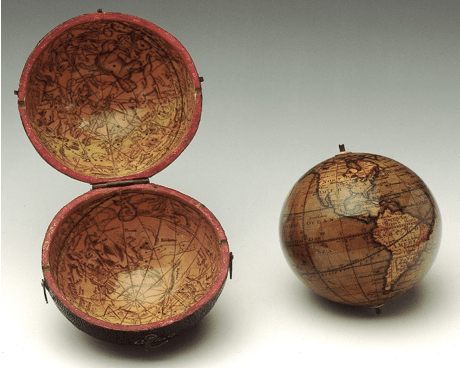
Owning the World: How the globe taught Britons to rule
Deb Wood examines the role of pocket globes in teaching Britons how to rule an Empire. ‘The Imperial Federation Map’ 1886: the poster-girl of imperial mapping.1 When we talk about mapping the British Empire, the image above is often one of the first to come to mind. With its swathes of red spreading across the... Continue Reading →
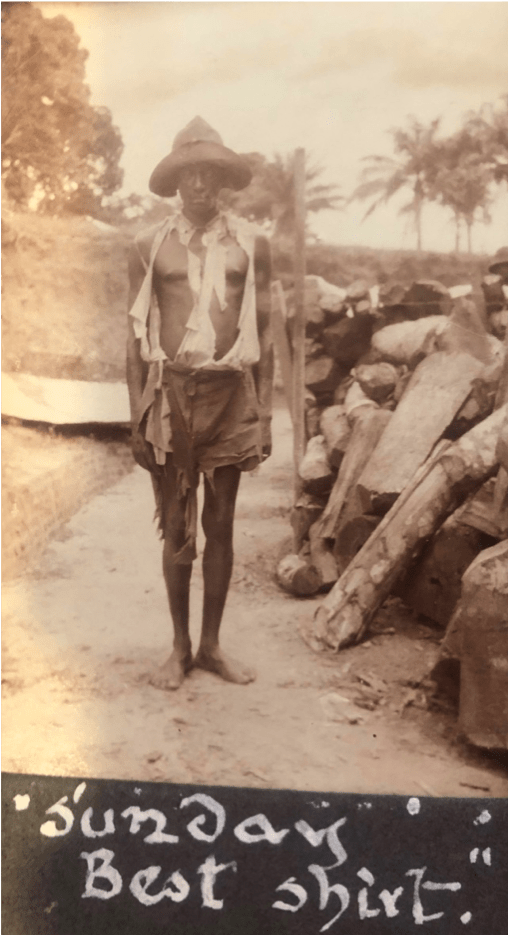
‘Sunday Best Shirt’: My Grandfather’s Imperial Legacy Through the Lens of Religious Satire
Lily Ann Lofty examines the role of religious satire in the uncomfortable imagery of her family's colonial past. My family history is what prompted me to study History at university and therefore I have consistently investigated my family’s past, particularly into the imperial ties that it holds. My grandfather, Hilary Lofty, I have learnt a... Continue Reading →
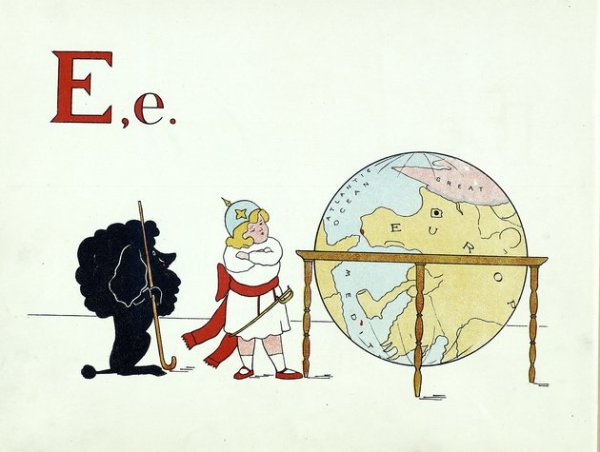
An ABC For Baby Patriots
The cover image for this blog is taken from Mrs Ernest Ames’ ABC for Baby Patriots, an illustrated children’s book published in London in 1898. Packed full of jingoistic cartoons and imperialist rhymes designed to divert and delight the children of Britain and Empire, ABC for Baby Patriots is an iconic example of nineteenth-century imperial literature, and demonstrates... Continue Reading →